Roof rats are agile climbers that access Osceola County homes by traveling along utility lines, overhanging live oak branches, and tall palm fronds. In suburban neighborhoods such as Poinciana, Bellalago, and…
Roof rats are agile climbers that access Osceola County homes by traveling along utility lines, overhanging live oak branches, and tall palm fronds. In suburban neighborhoods such as Poinciana, Bellalago, and Buenaventura Lakes (BVL), tile roofing barrel gaps, AC chase penetrations, and vinyl soffit returns provide immediate pathways into conditioned attics. Unlike subterranean pests, roof rats exploit any void wider than 1/2 inch to nest in fiberglass insulation, gnaw on electrical wiring, and contaminate ductwork with droppings. Chemical baiting alone fails to solve an active population because poison baits inside living spaces create secondary odor hazards when rodents expire inside drywall cavities, and exterior bait boxes do not prevent new animals from crossing from marshland vectors into the roofline.
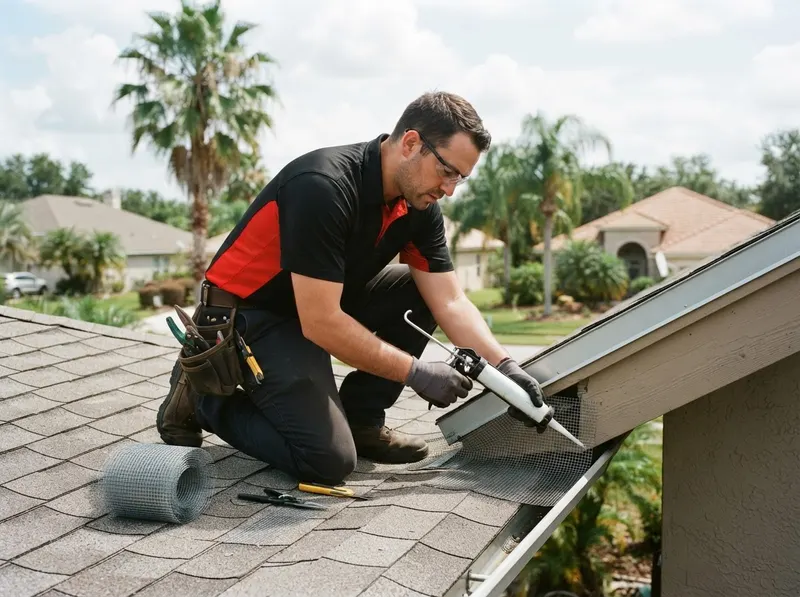
Effective rodent management relies on physical mechanical exclusion rather than temporary chemical sprays. Technicians seal roof-to-fascia gaps, ridge vents, gable louvers, and weep screeds using 1/4-inch 19-gauge galvanized steel mesh and chew-proof polyurethane foam. In short-term rental corridors near Celebration, Tapestry, and Flora Ridge, rodent presence threatens guest turnaround schedules and risks immediate booking cancellations. Installing physical barriers blocks entry permanently while interior mechanical snap traps placed along attic runways systematically clear the remaining population within 5 to 14 days without relying on rodenticides that endanger household pets.
Structural design dictates the scope of the exclusion work. Flat tile roofs in Mill Run and Solivita require individual adhesive mortar or metal eave closures beneath each lower tile edge, whereas homes bordering conservation belts along Lake Tohopekaliga (Lake Toho) demand heavy gauge reinforcement around ground-level plumbing entries and crawlspace vents. A standard service includes an initial evaluation, physical entry point sealing, active trapping, and follow-up trap checks to retrieve specimens and verify zero activity before final closeout.
Every job gets a firm, written price after a free on-site visit.
Tell us about your roof rat & rodent exclusion job in Kissimmee and we'll send a clear, written quote, usually the same day.
 Copper Kettle Pest Control